A few weeks ago, a gentleman from Serramonte sat down across from me with a folder he’d clearly been carrying around for a while. He hadn’t filed in three years. Nothing dramatic had happened. His mother got sick, he was driving back and forth to her place in Pacifica every weekend, and taxes just slid to the bottom of the pile. What finally brought him in was a single sentence a coworker said in the break room: “They can take it right out of your paycheck, you know.”
He wanted to know if that was true, and if so, how close he was.
I’m Izella Lui, a licensed Enrolled Agent, and some of my neighbors call me their Tax Relief Solver. I work on my own out of Daly City, with people across San Mateo County, San Francisco, and Alameda. No team, no call center, no one reading off a script. When you call, you get me, and I’m the person who reads your file from start to finish.
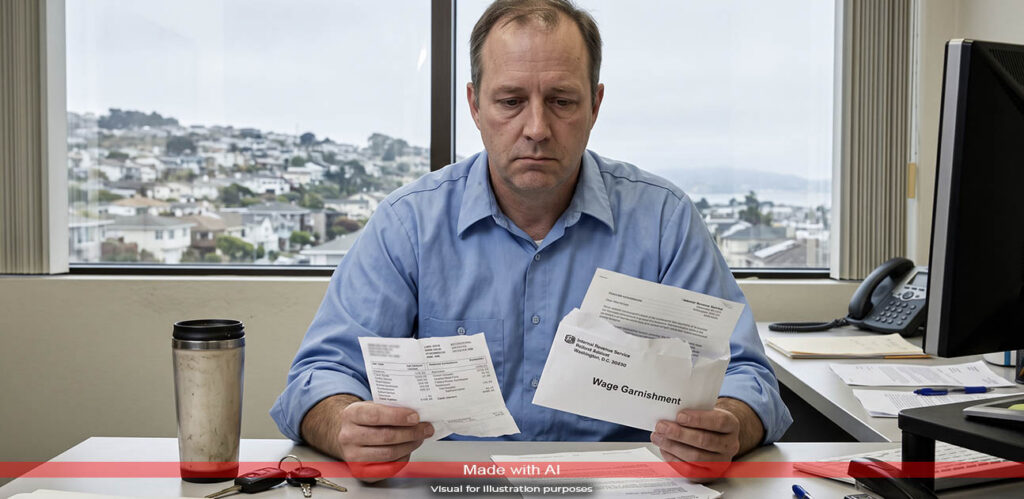
The honest answer I gave him is the same one I’ll give you: yes, unfiled tax returns can eventually lead to unfiled tax returns wage garnishment. It’s important to understand that unfiled tax returns wage garnishment is a serious issue that can escalate if not addressed early. But it doesn’t happen overnight, there are several steps and letters along the way, and the earlier you look at your situation, the more options you may still have.
Key Takeaways
If we were standing at the end of your driveway on a foggy Saturday morning, coffee in hand, here’s what I’d want you to hear:
- You’re not the only one on your street. I’ve sat with teachers, nurses, contractors, and retirees right here in Daly City who all had a year or two that slipped. It doesn’t make you careless. Usually it just means life got heavy for a while.
- Your paycheck isn’t at risk overnight. There are several letters before a wage levy, and that Final Notice is the one I’d ask you never to set aside. Find the date on it and call me before it passes.
- Don’t forget Sacramento. The FTB doesn’t wait for the IRS. When I look at your file, I always look at both, so nothing catches you off guard.
- Filing is the first real step. Your own return almost always tells a more accurate story than the estimate the agencies build for you. And you might have a refund or two waiting.
- I’ll be straight with you. If a simple payment plan is all you need, I’ll say so, even if it means less work for me. Being true to my work matters more to me than the size of the engagement.
How Unfiled Returns Can Turn Into a Paycheck Problem
Most people assume that if they don’t file, the IRS just doesn’t know about them. If you earn a paycheck, that’s rarely the case. Your employer sends a copy of your W-2 to the IRS and to the California Franchise Tax Board (FTB) every single year. Banks report interest. Brokerages report sales. If you do side work, clients may send 1099s. All of it lands in your file whether you send in a return or not.
When enough time passes, here’s the general sequence I see:
The IRS sends reminder letters. These usually ask you to file a missing return or explain why you didn’t need to.
The IRS may prepare a Substitute for Return. This is a return the IRS builds for you using only the income it has on record. It usually leaves out deductions, credits, and dependents, and often uses the least favorable filing status. In plain terms, it’s the IRS’s estimate, and it tends to come out higher than what you’d owe if you filed yourself. I’ve written more about how an unfiled tax return can lead to an IRS lien through this same process.
A balance gets assessed, and the bills begin. Once the IRS records what it believes you owe, you’ll start getting balance-due notices, and the tone of each one gets firmer.
Understanding unfiled tax returns wage garnishment can help you avoid serious financial consequences. If you find yourself in this situation, it’s crucial to take action before unfiled tax returns wage garnishment occurs.
Understanding Unfiled Tax Returns Wage Garnishment
A Final Notice of Intent to Levy arrives. This letter matters more than most. It generally gives you 30 days to respond and lets you know you have the right to request a Collection Due Process hearing. This is often the last formal checkpoint before a wage levy can begin.
A wage levy can follow. If nothing is addressed, the IRS can send a levy notice to your employer, who is then required to send a portion of each paycheck to the IRS. Unlike a one-time bank levy, a wage levy is continuous. It keeps going, paycheck after paycheck, until the balance is paid, other arrangements are made, or the levy is released. You can read the IRS’s own overview of how levies work.
Many taxpayers don’t realize that unfiled tax returns wage garnishment is often the last resort for the IRS, but being informed can help you avoid reaching that point.
The IRS calls this a “wage levy.” Most people call it wage garnishment. Either way, it’s the part folks worry about most, and understandably so.
California Moves on Its Own Track
It’s crucial to understand the implications of unfiled tax returns wage garnishment so you can effectively respond to notices from tax authorities. While preparing for potential unfiled tax returns wage garnishment, having a knowledgeable advocate can make a significant difference in your financial outcome.
Ignoring the potential for unfiled tax returns wage garnishment can lead to severe consequences. Each step in the process is important to understand to mitigate risks. This is the piece that catches a lot of Bay Area folks off guard. The FTB runs a completely separate process from the IRS, and the two agencies don’t wait on each other.
Being aware of unfiled tax returns wage garnishment is important for all taxpayers, especially if you have missed several filing deadlines.
If the FTB has your W-2 income but no California return, it can send a demand asking you to file, and if you don’t, it can issue its own proposed assessment based on the information it has. Once that balance becomes collectible, the FTB can send your employer an Earnings Withholding Order for Taxes. That order generally allows the state to collect up to 25% of your wages each pay period.
In my experience, the FTB can move faster than people expect. I’ve met with clients in Daly City who were bracing for the IRS and were surprised when the first garnishment came from Sacramento instead. So whenever I look at a new client’s situation, I check both agencies at the same time. Planning for one and getting blindsided by the other is something I work hard to help people avoid.
How to Tell Where You Are in the Process
One of the most useful things I can do for a new client is simply tell them which stage they’re in. It changes everything about what makes sense next. Here’s a quick way to get a rough sense on your own:
If you’ve only received reminder letters asking you to file, you’re likely early in the process, and that’s a good place to be.
The distinction between unfiled tax returns wage garnishment and other types of levies should be clear, as it directly affects how you manage your taxes and finances.
If you’ve received a letter showing a balance for a year you never filed, the IRS or FTB has probably prepared its own estimate. Filing your actual return is usually the next step.
If you’ve received a letter that says “Final Notice” or mentions your right to a hearing, please treat the date on that letter as real. This is where acting within the response window matters most.
If your employer has already handed you paperwork about a levy or withholding order, collection has started, but it’s not the end of the road. There may still be options, which I’ll walk through below.
If you’re not sure what you have, that’s completely normal. Bring the letters to me, and I’ll tell you in plain English what each one means.
What Filing Late Actually Does for You
When people are behind, they often think filing without being able to pay is pointless. I understand the logic, but it usually works the other way.
First, filing your own return replaces the IRS or FTB estimate with your real numbers. That means your actual filing status, your dependents, your deductions, and your credits. For a lot of families, that alone brings the balance down from what the agency calculated, though every situation is different and I can’t tell you your number until we’ve done the work.
Second, the failure-to-file penalty is generally much steeper than the failure-to-pay penalty, about 5% per month compared to 0.5% per month. Getting returns in can slow down how quickly the balance grows.
Third, you may have refunds sitting out there. If your employer withheld more than you actually owed in a given year, you generally have three years from the original due date to claim it. After that, the money is typically gone for good. I’ve had clients who were dreading the whole process find out that one or two of their missing years actually had refunds waiting.
And finally, most of the programs that can help with a balance generally require you to be current on your filings before the IRS will even consider them. Unfiled returns quietly keep those doors closed. It’s at the top of my list of common mistakes with IRS back taxes for exactly that reason.
Options You May Qualify For
Once your filings are current, here are the categories I walk people through most often. Each has its own eligibility rules, and I always review your file before telling you whether one realistically fits.
A payment plan that fits your actual budget. The IRS and FTB both offer installment agreements. Having an approved agreement in place generally means the agency won’t levy your wages while you keep up with it. The key is setting a monthly amount you can really keep, not one that falls apart in four months and leads to what a CP523 notice means.
Currently Not Collectible status. If your paycheck only covers basic living expenses, you may qualify to have active collection paused while the IRS reviews your finances periodically. Interest still adds up, but it can give a household real breathing room.
A levy release due to hardship. If a wage levy is already in place and it leaves you unable to cover necessary living expenses, you may be able to request a release. This requires documenting your real costs carefully, which is where local knowledge matters a lot.
Penalty relief. If you have a clean history in prior years, first-time abatement may apply to certain penalties. If you fell behind because of a serious illness, a death in the family, or another situation outside your control, reasonable-cause relief may be worth exploring.
An Offer in Compromise, in the right situation. This program fits fewer people than the ads suggest. I’ll tell you honestly if I don’t think you’re a good candidate, rather than take your money for an application that isn’t likely to go anywhere.
You can read more about the full range of back tax relief options Daly City residents may qualify for in a separate post.
How I Work Through This With You
I want you to know exactly what to expect, because not knowing is usually what keeps people from picking up the phone.
It’s essential to know that unfiled tax returns wage garnishment can happen if your accounts remain unresolved. Being proactive can save you a lot of trouble.
First, we talk. No cost, no pressure. You tell me which years you think are missing, where you work, and what letters you’ve received, including the ones you haven’t opened yet.
Second, I pull your transcripts. With your written authorization, I request your IRS wage and income transcripts and account transcripts. These show me every W-2 and 1099 the IRS has on file for you, whether a Substitute for Return was filed, and exactly where you stand in the collection process. If the FTB is involved, I look at that account too. For most people, this is the moment the fog starts to lift.
Third, we figure out which years matter. The IRS generally looks for the last six years of returns to consider someone current, though your transcripts will tell us which years the agencies are actually focused on.
Fourth, I prepare and file the missing returns, federal and California, year by year, using your real numbers.
Fifth, I lay out your options honestly, based on your actual income and expenses. If the right answer is a simple payment plan you could set up yourself through your IRS Online Account, I’ll tell you so.
Sixth, if we move forward, I handle the correspondence. As an Enrolled Agent, I’m federally authorized to represent you before the IRS. That means I’m the one on hold, I’m the one answering their letters, and I keep you updated in plain English along the way. I follow IRS Circular 230, so I won’t promise you a result before I’ve looked at your file, and the IRS and FTB make the final decisions on every program.
Ultimately, understanding unfiled tax returns wage garnishment can empower you to manage your financial obligations and avoid undue stress.
That’s what being true to my work means to me. I keep my caseload small on purpose, so your file never gets passed down a hall to someone you’ve never met.
Why Local Context Matters Here
When I build a case for a payment plan or a hardship request, the IRS looks at your living expenses against national and local standards. A family in Westlake or Foster City or the Outer Sunset is paying rent, PG&E bills, childcare, and commuting costs that look nothing like a national average. I know these numbers because I live with them too, and I know how to document them so they hold up.
That detail can make the difference between a monthly payment that works and one that leaves you short every month. If you’re self-employed, there’s more on self-employed unfiled taxes, and business owners may find my post on IRS collection actions for business owners helpful. You can also read about back tax relief options in San Mateo County.

What to Gather Before We Talk
You don’t need a perfect folder. Most people don’t have one. But if you can, bring:
- Any IRS or FTB letters, opened or not
- Your most recent pay stub
- W-2s or 1099s for the missing years, if you have them
- A rough list of which years you think are unfiled
- A general sense of your monthly rent or mortgage, utilities, childcare, and commuting costs
- Any paperwork your employer has given you about a levy or withholding order
If all you have is a memory of roughly what happened, that’s still enough to start.
Frequently Asked Questions
Can the IRS really take money from my paycheck if I haven’t filed? It can, but not right away. The IRS generally has to assess a balance, send notices, and send a Final Notice of Intent to Levy with your right to a hearing before a wage levy begins. That’s why the letters matter so much.
How much of my paycheck can be taken? For the IRS, a portion of your wages is exempt based on your filing status and number of dependents, and the rest can be levied. California’s FTB can generally take up to 25% of your wages. Your exact amount depends on your situation, which is something I can look at with you.
My wages are already being garnished. Is it too late? It’s rarely too late to look at your options. Depending on your situation, a payment plan, a hardship release, or getting your returns filed may change things. Let’s look at your file together.
If you are dealing with unfiled tax returns wage garnishment, it’s vital to reach out for help before your situation escalates.
When unfiled tax returns wage garnishment occurs, knowing your rights and options can help you navigate the process more effectively.
Will my employer find out? If a levy or withholding order is issued, your employer is notified because they’re the ones required to send the payments. That’s one of the reasons people like to get ahead of this early.
I haven’t filed in five or six years. Where do I even begin? With your transcripts. Once I pull them, we’ll know exactly which years the IRS and FTB have on record, and we’ll take it one year at a time from there.
Do you only work with people in Daly City? Daly City is home base, but I work throughout San Mateo County, San Francisco, and Alameda.