The Longer You Wait, the Bigger It Gets
Understanding how to fix unfiled tax returns is the first step towards resolution. Let me be straight with you—if you have unfiled tax returns sitting in a drawer somewhere, or you’re crossing your fingers hoping the IRS just forgets about you, I need you to stop and read this first.
Understanding how to fix unfiled tax returns is crucial for anyone facing this situation. Many people ask how to fix unfiled tax returns once they realize the importance of compliance.
I’m Izella Lui, and I work with real people right here in Daly City, Alameda, San Francisco, and across San Mateo County who are in exactly that position. Some of my clients haven’t filed in two years. Some haven’t filed in ten. And almost all of them told me the same thing when they finally called me: “I just didn’t know how to start.”
Knowing how to fix unfiled tax returns can save you from escalating issues with the IRS. Once you learn how to fix unfiled tax returns, the path becomes clearer and more manageable.
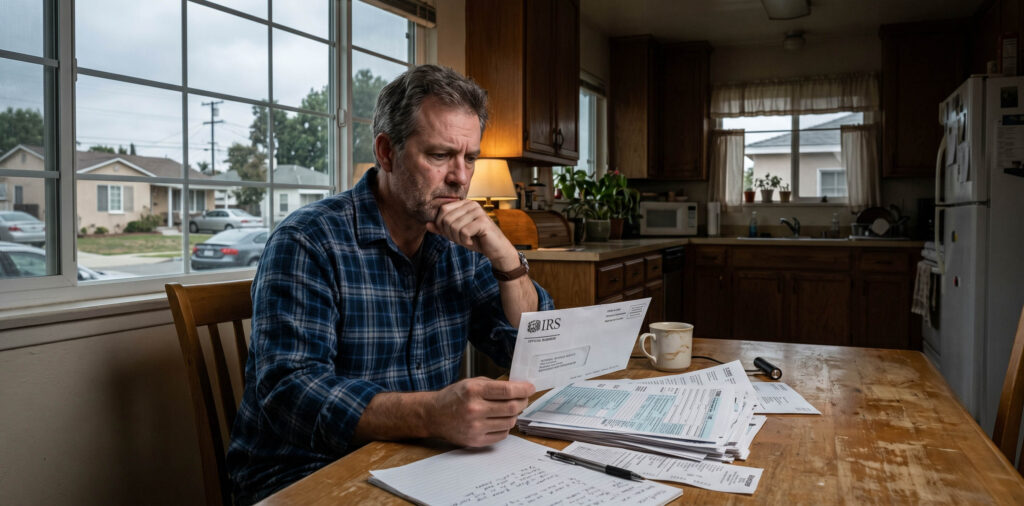
Here’s what I want you to know: you can fix this. Knowing how to fix unfiled tax returns is not as complicated as the IRS wants you to think—but the timing matters a lot. The longer you delay, the more the IRS escalates. Penalties compound. Interest grows. And in California, the Franchise Tax Board (FTB) adds its own set of problems on top of the federal ones.
It is essential to know how to fix unfiled tax returns before any penalties pile up. Learning how to fix unfiled tax returns should be your initial focus. Many clients find out how to fix unfiled tax returns through personalized consultations. Don’t let fear prevent you from learning how to fix unfiled tax returns. Understanding how to fix unfiled tax returns is key to taking control of your situation.
Clients often ask how to fix unfiled tax returns when they first reach out. Many individuals simply want to know how to fix unfiled tax returns without hassle. If you wonder how to fix unfiled tax returns, you are not alone. But I’ve helped people come back from all of it. And I can help you too. Understanding how to fix unfiled tax returns can open doors to better financial health.
Many people find that learning how to fix unfiled tax returns is liberating. Knowing how to fix unfiled tax returns can ease your stress and anxiety. Your journey to understanding how to fix unfiled tax returns starts with the first step.
Key Takeaways — In Izella’s Words
The IRS does not care about your understanding of how to fix unfiled tax returns.
(Because I want you to leave here feeling like you actually know your next step)
“Filing late is always better than not filing at all.” I say this to almost every client I meet. The IRS penalizes you harder for not filing than for filing late with a balance. Even if you can’t pay the full amount, getting that return in stops the worst of the penalties.
“The IRS filing a return for you is a disaster — but it’s fixable.” If the IRS has already filed a Substitute for Return, we can file a superseding return that replaces it with your actual numbers. I’ve done this for clients in Daly City and San Mateo who had no idea this was even an option.
Learning how to fix unfiled tax returns can help avoid serious penalties. Once you know how to fix unfiled tax returns, you can take proactive steps. Understanding how to fix unfiled tax returns is critical for California residents.
“Two tax agencies in California means two problems — I handle both.” Living in the Bay Area means you’re dealing with federal and state. The FTB doesn’t wait for the IRS to settle before they start pursuing you. I coordinate both tracks at the same time so nothing slips.
If you need help on how to fix unfiled tax returns, I am here for you.
“You don’t have to do this scared.” Most people who come to me have been avoiding this for months or years because it feels overwhelming. Within our first conversation, I usually have them feeling like there’s actually a path forward. Because there is.
Let’s discuss how to fix unfiled tax returns to get you back on track. I can show you how to fix unfiled tax returns step by step.
“I’m true to my work — and that means I’m true to you.” I don’t take shortcuts. I don’t give you a generic plan. I look at your specific situation, your specific years, your specific income, and I build a strategy that actually works for your life.
Why People End Up With Unfiled Tax Returns (And Why It’s Not Always Your Fault)
Before we talk solutions, let me acknowledge something: life happens. People miss a filing deadline for real reasons.
Maybe you went through a divorce and the finances were a mess. Maybe you lost your job and didn’t think you owed anything, so why file? Maybe you were self-employed—driving for Uber, doing gig work in San Francisco or delivering food in Alameda—and nobody explained quarterly taxes to you. Maybe you went through a health crisis. Maybe you’re just scared of what the number will say.
Whatever the reason, the IRS does not care about your circumstances—unless someone knows how to present them properly. That’s where I come in.
I’ve sat across from business owners in San Mateo who thought they owed six figures and walked out owing a fraction of that. I’ve helped families in Daly City who received wage garnishment notices and didn’t know they had options. I’ve guided first-generation immigrants in San Francisco who were filing U.S. taxes for the first time after years of confusion about whether they even needed to.
Every case is different. Every person deserves someone who actually listens.
What Happens When You Don’t File (The IRS Isn’t Patient)
If you’re wondering whether the IRS will just let it go—they won’t.
Here’s what actually happens when you have unfiled tax returns:
1. The IRS Files for You — and You Won’t Like Their Numbers
When the IRS runs out of patience, they file what’s called a Substitute for Return (SFR). They use whatever income data they have from your W-2s, 1099s, and third-party reports. They don’t give you any deductions. They don’t give you any credits. They don’t care that you had business expenses, childcare costs, or a mortgage. They just file the simplest, most unfavorable version of your return—and then send you the bill.
I’ve seen clients in Alameda who owed $4,000 on their own return, but the IRS filed an SFR that said they owed $22,000. That’s why knowing how to fix unfiled tax returns correctly—on your terms before the IRS acts—is so critical.
2. Penalties Stack Up Fast
The failure-to-file penalty is 5% of your unpaid taxes per month, up to 25%. The failure-to-pay penalty is an additional 0.5% per month. Then there’s interest on top of that. By the time some of my clients in San Francisco find me, what started as a $3,000 balance has grown to over $10,000 just from penalties and interest.
3. The California FTB Adds Its Own Layer
If you live or work in California, you don’t just deal with the IRS. You deal with the California Franchise Tax Board too—and the FTB is aggressive. They move fast, they assess penalties independently, and they have the authority to suspend your California driver’s license if your tax debt is large enough.
Many of my clients don’t realize they’re being chased by two separate agencies at the same time. That’s a situation that requires someone who knows both the federal IRS process and California-specific tax law.
How to Fix Unfiled Tax Returns — Step by Step

Here’s exactly how the process works when you come to me:
Step 1: We Figure Out Which Years Are Missing
First, we pull your IRS account transcript together. This tells us which tax years have no return on file, which years have an SFR, and what balances the IRS is currently showing. For California clients, we also check your FTB account separately.
I do this for every client before we take any other action. You can’t solve a problem you haven’t fully mapped.
Many clients have learned how to fix unfiled tax returns and have found relief.
Step 2: We Gather Your Income and Expense Documentation
Once we know the scope, we start building your actual returns. I work with you to gather:
- W-2s and 1099s (we can request copies from the IRS if you’ve lost them)
- Self-employment income records if you were doing gig work, freelance, or running a business in the Bay Area
- Deductible expenses—home office, vehicle mileage, business costs
- Life changes that affect your filing—marriage, divorce, dependents, real estate
- Any estimated taxes you may have paid but forgotten about
I take the time to go through this carefully because every legitimate deduction we find reduces what you owe. I’ve found deductions clients had completely forgotten about that changed their refund picture significantly.
We can explore how to fix unfiled tax returns together and ensure compliance.
Step 3: We File in the Right Order — and Strategically
Let’s chat about how to fix unfiled tax returns today.
You have to file the oldest returns first, working toward the most recent year. But there’s strategy involved. If you’re owed refunds on older years, there’s a deadline to claim them (generally three years from the original due date). We prioritize those first.
For years where you do owe a balance, filing the return is still the right move—because it stops the failure-to-file penalty and gives us the ability to negotiate the actual balance.
Let’s work together on how to fix unfiled tax returns moving forward. Knowing how to fix unfiled tax returns empowers you to take charge. Now that you know how to fix unfiled tax returns, don’t hesitate to reach out.
Step 4: We Address What You Owe
Filing the return is just the first step. If you owe money, you have options. I help my clients explore:
- IRS Installment Agreements – monthly payment plans based on what you can actually afford
- Currently Not Collectible (CNC) Status – if your income and expenses show you truly can’t pay right now, we can get collections paused
- Offer in Compromise (OIC) – in qualifying situations, we can negotiate to settle your debt for less than the full amount owed
- Penalty Abatement – the IRS allows first-time penalty relief if you’ve had a clean history; I’ve successfully reduced penalties for many clients using this program
- California FTB Installment Plans – for state tax debt, we work with the FTB separately to set up an arrangement that doesn’t crush your monthly budget
Call me to find out how to fix unfiled tax returns effectively.
With the right approach on how to fix unfiled tax returns, you can see positive results.
Not everyone qualifies for every option—and I won’t tell you that you do when you don’t. What I will do is be honest with you about what’s realistic, and fight hard for every option that is available to you.
Frequently Asked Questions
Q: What if I haven’t filed for many years? Is it too late? It’s not too late. In my experience, the most important thing is to start. I’ve worked cases with clients who were 7–8 years behind on filing. We mapped it out, prioritized the years that mattered most, and resolved it systematically. The IRS actually prefers that people come into compliance voluntarily—which gives us leverage in negotiations.
Q: Will I go to jail for unfiled taxes? Criminal prosecution for unfiled returns is rare and usually reserved for people who are actively hiding income or running a fraudulent scheme. The overwhelming majority of people with unfiled returns are just behind—not criminals. What you want to avoid is continuing to ignore IRS notices, because that escalation is what makes situations more serious. If you’re reaching out and coming into compliance, that works in your favor.
Q: Can you help if I’m self-employed or a small business owner in Daly City or San Francisco? Absolutely. Self-employment and small business tax situations are actually a big part of what I handle. Gig workers, contractors, Bay Area small business owners—these situations often involve multiple years of missing quarterly payments and business deductions that were never claimed. There’s almost always more room to work with than people think.
Q: What about the California Franchise Tax Board specifically? The FTB is more aggressive than the IRS in some ways. They have tools like license suspension, wage garnishment, and bank levies—and they use them. I work with California state tax issues directly and can open communications with the FTB on your behalf to prevent enforcement actions while we build a resolution.
Q: How do I get started with you? Call me or book a consultation. I work with clients in Daly City, Alameda, San Francisco, and throughout San Mateo County. Our first conversation is where I listen to your situation and tell you honestly what I think we’re working with. No pressure. No judgment. Just a real conversation about your real situation.
You Don’t Have to Face the IRS Alone
The IRS counts on people being too overwhelmed, too scared, or too confused to fight back. That’s how they collect billions in penalties from people who didn’t know their options.
I built my practice in Daly City because I wanted to be the person in this community that people could actually call—someone who speaks plainly, knows the process inside and out, and stays in your corner from the first call to the final resolution.
If you have unfiled returns—whether it’s one year or ten—please don’t wait any longer. Every month you wait adds more to what you owe and shrinks your options.
Call Izella Lui today. Let’s figure out exactly where you stand and build a plan to get you clear.
Serving Daly City, Alameda, San Francisco, and San Mateo County, California.