If you’ve ever felt your stomach drop at the sight of an envelope with “Internal Revenue Service” in the return address, you’re not alone — and you’re in good company here in Daly City, San Mateo County, San Francisco, and Alameda. I’m Izella Lui, a licensed Enrolled Agent, and I work one-on-one with people across this area, no team, no call center, just me and your actual paperwork. One of the questions I get asked most, usually after we’ve worked through a notice together, is some version of: “How do I keep this from happening again and how to avoid IRS letters California? How to avoid IRS letters California is something many people wish to know.”
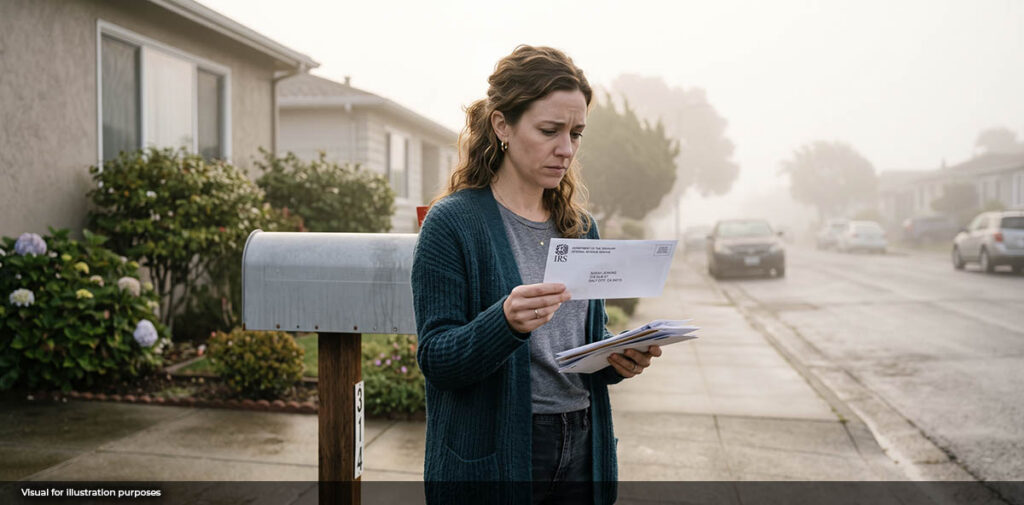
It’s a good question, and it deserves a real answer, not a vague one. So let’s walk through the habits that genuinely help California taxpayers avoid IRS letters in the first place — the practical, unglamorous stuff that makes a bigger difference than people expect.
Understanding how to avoid IRS letters California is crucial for every taxpayer. By following best practices, the chances of receiving unexpected correspondence from the IRS can be significantly reduced.
Key Takeaways
Here’s what I’d tell you if we were sitting across from each other at your kitchen table in Daly City:
- Most IRS letters aren’t personal, and they’re not a sign that you did something wrong on purpose. Usually, something just didn’t line up.
- Small habits — an updated address, matched income forms, a current W-4 — genuinely reduce how often you hear from the IRS. This isn’t a guess on my part; I see it play out with clients regularly.
- Opening the mail right away is the single most useful thing you can do, even before you know what you’re going to do about it.
- There’s no single fix that works for every household. What makes sense for a self-employed contractor in Alameda looks different from what makes sense for a two-income family in San Mateo County.
- You deserve someone who actually looks at your specific numbers, not a generic checklist. That’s the whole reason I keep this practice small.
Why the IRS Sends Letters in the First Place
For California taxpayers looking to understand how to avoid IRS letters California, being proactive is essential. By knowing how to avoid IRS letters California, taxpayers can ensure smoother interactions with the IRS. It’s important to be aware of how to avoid IRS letters California in order to maintain peace of mind regarding your tax obligations.
Learning how to avoid IRS letters California can save taxpayers time and stress. Knowing the steps on how to avoid IRS letters California is vital for managing your tax affairs correctly. Addressing issues on how to avoid IRS letters California early can prevent bigger problems later. By understanding how to avoid IRS letters California, individuals can navigate their tax responsibilities more effectively.
It’s essential for every person filing taxes in California to learn how to avoid IRS letters California. Those seeking guidance on how to avoid IRS letters California should regularly review their financial documents. Noting the importance of how to avoid IRS letters California is key to avoiding unnecessary hassle. For anyone wondering how to avoid IRS letters California, keeping organized records will help immensely.
Those familiar with how to avoid IRS letters California know the importance of filing accurate returns. Understanding how to avoid IRS letters California will empower you to take control of your tax situation. Each taxpayer should be aware of how to avoid IRS letters California to minimize issues.
Tips on How to Avoid IRS Letters California
Strategies on how to avoid IRS letters California can greatly reduce stress related to tax filings. Before we get into prevention, it helps to understand what’s actually triggering these letters. According to the IRS itself, notices generally go out for a handful of reasons: there’s a balance due, a refund amount changed, the agency has a question about something on your return, they need to verify your identity, or they’re requesting additional documentation. None of these mean you did something wrong on purpose — most of the time, it’s a mismatch, a missing form, or a number that didn’t line up with what a third party reported.
Ultimately, knowing how to avoid IRS letters California can save you time and effort. Good organization is necessary for anyone learning how to avoid IRS letters California. Taxpayers should always consider how to avoid IRS letters California in their planning. To effectively manage tax obligations, knowing how to avoid IRS letters California is essential.
Achieving peace of mind involves understanding how to avoid IRS letters California. For those in California, learning how to avoid IRS letters California is crucial to effective tax management. Being proactive about how to avoid IRS letters California can help taxpayers stay ahead of potential issues. Ultimately, knowing how to avoid IRS letters California can significantly improve your tax experience. By applying the principles of how to avoid IRS letters California, taxpayers can ensure a smoother tax process.
That last part is worth sitting with for a second. A large share of these letters — the IRS calls one common version a CP2000 — happen because income reported to the IRS by an employer, bank, brokerage, or client didn’t match what showed up on your return. Maybe a freelance client sent a 1099 you never received in the mail. Maybe you switched jobs mid-year and one W-2 slipped through the cracks. Maybe a small blip in interest income from a savings account got left off. The IRS’s computer systems are very good at catching these mismatches, even when the dollar amount is small.
For anyone navigating taxes, understanding how to avoid IRS letters California is essential for compliance. Finally, embracing the knowledge of how to avoid IRS letters California is vital to successful tax management. Once you understand that most letters are triggered by information not lining up, avoiding them starts to feel a lot more manageable.
Keep Your Address Current With Both the IRS and the FTB
This sounds almost too simple, but I can’t tell you how many cases I’ve seen where a letter went to an old apartment in San Francisco or a previous address in Alameda, and by the time it caught up, deadlines had already passed. If you move — even within San Mateo County — update your address with the IRS using Form 8822, and separately with the California Franchise Tax Board, since they don’t automatically share that information with each other. The same goes for your address with the U.S. Postal Service; a forwarding order helps, but it’s not a substitute for updating the agencies directly.
Match Every Income Document Before You File
Before you file your return, lay out every W-2, 1099-NEC, 1099-K, 1099-INT, 1099-DIV, and any other income document you received, and make sure each one made it into your return. If you’re self-employed, running a small shop, or doing gig work anywhere from Mission Street to the Alameda waterfront, this step matters even more, because you’re often the one collecting these forms rather than an employer handing you one neatly organized packet. If a form seems to be missing, don’t just skip it — reach out to whoever should have sent it, because the IRS almost certainly already has a copy on file.
Set Up an IRS Online Account
One of the simplest habits I recommend to almost every client is creating an IRS Online Account through IRS.gov. It lets you see your own wage and income transcripts, check your balance, review notices you’ve already received, and confirm what the IRS actually has on file for you — often before a letter even arrives. A lot of people are surprised at how much visibility this gives them into their own tax picture. I walk clients through this step regularly, and it takes the guesswork out of a lot of what would otherwise show up as a surprise in the mail.
Get Your Withholding or Estimated Payments Right
If you’re a W-2 employee, an outdated W-4 is one of the quieter causes of IRS letters, especially after a raise, a second job, a marriage, or a new child. The IRS has a free Tax Withholding Estimator on IRS.gov that takes about ten minutes and tells you whether your withholding is on track for the year.
If you’re self-employed — and I work with a lot of independent contractors, rideshare drivers, and small shop owners across this county — quarterly estimated tax payments are usually the piece that slips. Those payments are generally due in mid-April, mid-June, mid-September, and mid-January. Missing them, or underpaying consistently, is one of the more common reasons a balance builds up and a letter eventually follows. Setting a recurring reminder on your phone for those four dates is a small habit that saves a lot of stress later.
File Every Return, Even in a Hard Year
If money is tight and you’re tempted to skip filing altogether, please don’t. Filing on time, even if you can’t pay everything you owe, keeps a much smaller, more manageable letter from turning into a bigger one. The penalty for not filing is typically steeper than the penalty for not paying in full, and an unfiled return tends to generate more IRS attention over time, not less. If a filing deadline is coming up and you’re overwhelmed, an extension is available — but remember, an extension to file is not an extension to pay.
Open Every Piece of IRS Mail the Same Day
I know the instinct to set an unopened envelope on the counter and deal with it later. I understand it completely. But every notice has a response window printed on it, and that window is often shorter than people expect — sometimes just 30 days. Opening it right away, even if you don’t act on it immediately, means you know what you’re working with and how much time you actually have. It’s the single habit I’d ask every one of my Daly City and San Mateo County neighbors to adopt, even above all the others on this list.
Keep Your Records Organized, Not Perfect
You don’t need a color-coded filing system. What you do need is a simple habit of keeping your tax documents — W-2s, 1099s, receipts for deductions, mileage logs if you’re self-employed — together in one place throughout the year, rather than hunting for them every April. When records are organized, it’s much easier to catch a missing form before you file, and much easier to respond quickly if a letter does arrive asking for documentation.
Watch for Scams That Look Like IRS Mail
Not every letter that looks official is real. Scam mail and phishing attempts that mimic IRS letterhead have become more common, and some are convincing. A genuine IRS letter will never demand immediate payment over the phone, ask for gift cards, or threaten immediate arrest. If something feels off, your IRS Online Account is the fastest way to check whether a notice is legitimate, or you can bring it to me and I’ll help you sort out what’s real.
Why Local Guidance Actually Helps Here
I keep my practice focused on Daly City, San Mateo County, San Francisco, and Alameda because the day-to-day reality of living here shapes a lot of these small decisions. When a client tells me their rent went up again, or that a slow season hit their small business harder than expected, I understand that context because I work in this same economy. That understanding matters when we’re looking at withholding, estimated payments, or what documentation actually makes sense for your household — not a generic, national template.
What Working With Me Actually Looks Like
I’ll be honest with you: this is a one-person practice. When you call, you talk to me. When we go over your withholding or your notices, I’m the one reading them, not someone reading from a script. As a licensed Enrolled Agent, I’m federally authorized to represent taxpayers before the IRS in every state, and I hold myself to the standards of Circular 230.
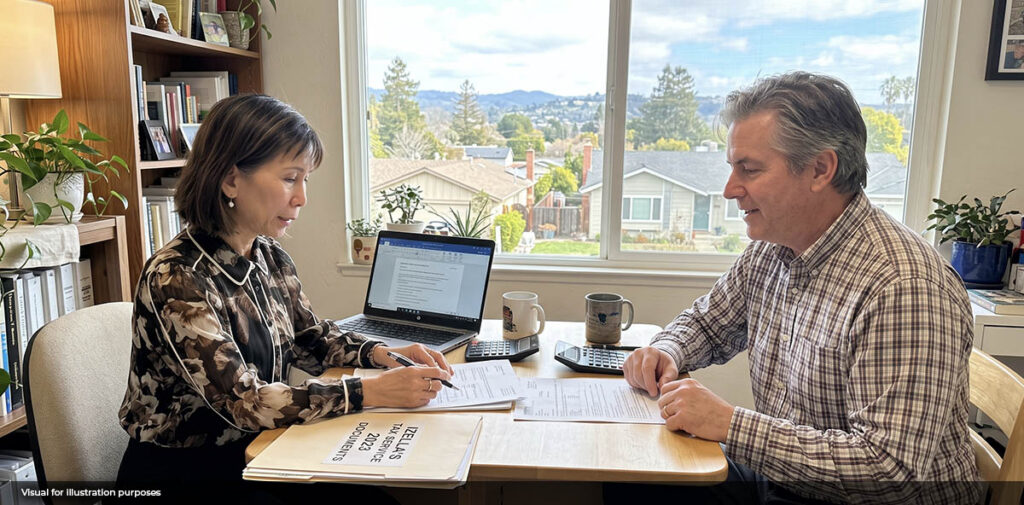
Here’s roughly how it goes. First, we talk — no cost, no pressure — about what’s been showing up in your mailbox or what you’re hoping to keep from happening again. Second, with your authorization, I can pull your IRS account transcripts so we’re working from what’s actually on file. Third, I walk you through, honestly, the specific habits and adjustments that make sense for your situation — whether that’s a withholding change, a quarterly payment schedule, or simply a better system for organizing your documents. I don’t oversell anything, and I won’t promise you that any single step means you’ll never see another letter, because that wouldn’t be honest. What I can do is help you meaningfully reduce the odds.
What to Gather Before We Talk
You don’t need a perfectly organized folder to reach out. But if you’d like a head start, here’s what helps most:
Any IRS or FTB letters you’ve received recently, even ones you set aside. Your most recent pay stub or a sense of your self-employment income. A rough idea of whether you filed every year for the last few years, or if there are gaps. Any 1099s or W-2s you’re unsure got reported correctly.
Frequently Asked Questions
Does getting a letter mean I’m being audited? Not usually. Most letters are routine — a math correction, an income mismatch, or a request for more information. A full audit is a different, much less common process.
I already have an IRS letter sitting on my counter. Should I still read this? Yes, and please open that letter today if you haven’t already. This guide is about avoiding future letters, but if one has already arrived, the response window is likely already running.
Can updating my address really make a difference? It can matter more than people expect. A letter sent to an old address still starts its response clock, whether or not you actually see it in time.
I’m self-employed — is this harder for me? It takes a bit more attention, mainly around quarterly estimated payments and organizing 1099s, but it’s very manageable once you have a system. I work with a lot of independent contractors and small business owners across this area on exactly this.
Do you only work with people in Daly City? Daly City is where I’m most rooted, but I work throughout San Mateo County, San Francisco, and Alameda as well.
How do I get started? Reach out for an initial conversation. Bring whatever letters or questions you have, even if it feels like a small thing. We’ll go through it together.