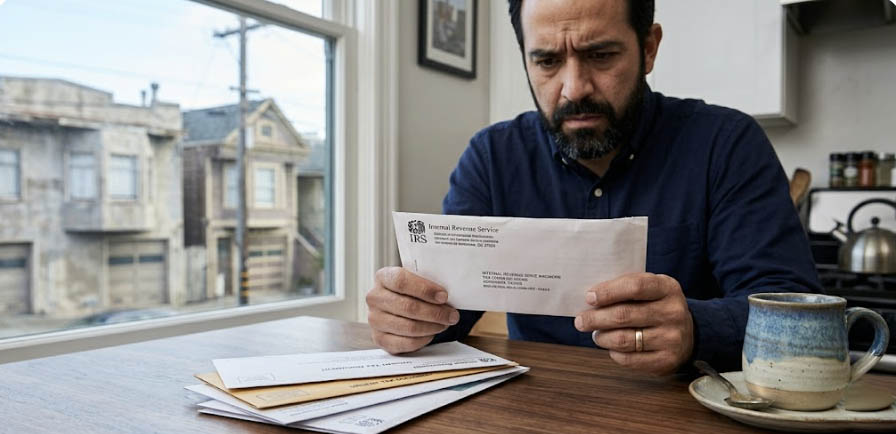
If you’ve got unfiled tax returns sitting in the back of your mind — and maybe a stack of IRS notices sitting in a drawer — you’re not alone. Every year, thousands of people across Daly City, Alameda, San Francisco, and San Mateo County find themselves in exactly this situation. Life gets busy. The numbers feel overwhelming. One year turns into two, and suddenly you don’t even know where to start. This guide will help you understand What to Do About Unfiled Tax Returns.
When faced with unfiled tax returns, knowing What to Do About Unfiled Tax Returns is crucial for your financial wellness. Ignoring this issue can lead to serious consequences, but you can take charge.
Each year that passes without addressing what to do about unfiled tax returns increases the stakes and potential penalties.
Here’s the truth: unfiled tax returns don’t go away on their own. But they are fixable — and with the right person in your corner, the process doesn’t have to feel like you’re going to war with the government.
That’s exactly where Izella Lui comes in.
With the right knowledge of what to do about unfiled tax returns, you can avoid common pitfalls and make informed decisions.
Izella is a tax relief expert based right here in the Bay Area, and she has spent years helping real people — families, self-employed workers, small business owners — navigate the IRS and California Franchise Tax Board (FTB) when things get complicated. She doesn’t sugarcoat your situation, but she doesn’t make it feel impossible either. She’s the kind of person you want sitting next to you when you’re looking at that IRS letter.
This guide walks you through What to Do About Unfiled Tax Returns, why acting sooner matters, and how Izella personally approaches each case to get her clients the best possible outcome. Remember, knowing what to do about unfiled tax returns can change your financial future.
Key Takeaways — In Izella’s Own Words
If you find yourself wondering what to do about unfiled tax returns, reach out for guidance and support.
“Look, I know this stuff is scary. I talk to people every week who’ve been sitting on this problem for years because they didn’t know what to do or they were too embarrassed to ask for help. There’s no judgment here. My job is to get your life back to normal — and I’m going to do exactly that.”
Here’s what Izella wants you to walk away knowing:
Don’t underestimate the importance of knowing what to do about unfiled tax returns as this knowledge can lead to a better outcome. Understanding what to do about unfiled tax returns can help you regain control over your finances.
You have more options than you think. The IRS and FTB are not impossible to work with — they have programs designed specifically for people in your situation. The key is knowing how to use them.
Every day you wait costs you more. Penalties and interest don’t pause. The sooner you start, the less you’ll ultimately owe.
You don’t have to have all your records together to call me. Seriously. Call with what you have and we’ll figure out the rest together. Understanding what to do about unfiled tax returns can empower you to take control of your financial situation.
Filing late is always better than not filing. The Failure to File penalty is five times worse than the Failure to Pay penalty. Getting the return in — even late, even if you can’t pay in full — is the right move.
Working with someone local matters. You need someone who will actually pick up the phone when you have a question, not a 1-800 number that puts you on hold.
Why Unfiled Tax Returns Are Serious — But Solvable
Let’s talk honestly about what happens when you don’t file. Because a lot of people assume the IRS either won’t notice or will eventually just forget about it. Neither is true.
When you have unfiled returns, here’s what can actually happen:
The IRS May File for You — and Not in Your Favor
The IRS has the legal authority to file what’s called a Substitute for Return (SFR) on your behalf. The problem is, they don’t know about your deductions, your expenses, your dependents, or your situation. They just use the income information they received from employers and banks. That means you can end up owing far more than you actually should — and the IRS will begin collection actions based on that inflated number.
Penalties and Interest Stack Up Fast
There are two major penalties the IRS can hit you with for unfiled returns. The Failure to File penalty is 5% of your unpaid taxes for each month your return is late, up to 25%. The Failure to Pay penalty adds another layer. And then interest on top of all of that. The longer you wait, the more that number grows.
You Lose Your Refund
If the IRS actually owes you money for those years, there’s a three-year window to claim a refund. After that, it’s gone. For good. Many of Izella’s clients are surprised to find out they were actually owed money for some of the years they didn’t file — and reclaiming that refund was part of getting their situation resolved.
Taking the first step in understanding what to do about unfiled tax returns can set you on the right path.
California’s FTB Is Even Less Forgiving
On top of federal taxes, California residents deal with the Franchise Tax Board, which has its own penalties, its own enforcement timeline, and its own collection methods. The FTB moves aggressively and can intercept your state tax refund, put a lien on your property, or levy your wages without much warning. Izella works with California state tax issues regularly and knows exactly how to handle both the IRS and FTB simultaneously — because most Bay Area clients are dealing with both.
What to Do About Unfiled Tax Returns: A Real Step-by-Step Approach
Izella’s approach is practical. She doesn’t start by overwhelming you with paperwork or legal jargon. She starts by getting a clear picture of where you are.
Step 1: Stop Avoiding It — Get the Full Picture First
The first thing Izella does when a new client comes to her is pull their IRS transcripts. These are official records that show every year the IRS has on file for you, what income was reported, and whether returns were filed. You might not even be sure which years are missing — and that’s okay. Izella figures that out for you.
She often finds that people come to her thinking they owe money for, say, three years — and it turns out the IRS only has records for two, or one of those years was actually filed. Getting an accurate starting point is everything.
Step 2: Gather What You Have — She’ll Work With What She’s Got
Here’s something Izella says to nearly every new client: “Bring me what you have. We’ll figure out the rest.” If you’ve lost W-2s, 1099s, or bank records, she knows how to obtain wage and income transcripts directly from the IRS. If you’re self-employed and your bookkeeping is a mess, she helps you reconstruct your income and expenses in a way that’s defensible and fair to you.
She’s worked with gig economy workers in San Francisco who didn’t know how to handle their 1099-K income from rideshare and delivery apps. She’s helped small business owners in San Mateo County who kept everything in shoeboxes. She’s helped residents in Alameda who moved from another state and had multiple state filings to untangle. She has seen all of it.
Step 3: File Strategically, Not Just Frantically
Many clients find relief once they understand what to do about unfiled tax returns and tackle their situation head-on.
By grasping what to do about unfiled tax returns, you can secure a stable financial future.
When it’s time to actually prepare and file those back returns, Izella makes sure every deduction, credit, and expense you’re entitled to is captured. This is where a lot of people who try to handle this themselves miss out — they file in a panic just to get something in, and they leave money on the table or create new problems.
Izella prepares returns that are accurate, complete, and done in the order that makes the most sense for your situation. That sometimes means filing the most recent years first, to establish compliance with the IRS before addressing older returns. She thinks through the strategy so you don’t have to.
Step 4: Address What You Owe — There Are More Options Than You Think
People have achieved significant changes in their financial status by understanding what to do about unfiled tax returns.
Once the returns are filed and the actual balance is determined, Izella works on resolving what you owe. She is well-versed in options that include:
Installment Agreements — A monthly payment plan with the IRS that you can realistically afford. Izella negotiates these to keep your payments manageable based on your actual income and living expenses.
Currently Not Collectible (CNC) Status — If you genuinely cannot pay right now, Izella can request that the IRS temporarily pause collection activity. This doesn’t erase the debt, but it stops the bleeding while you stabilize your finances.
Offer in Compromise — This is the program people see advertised on TV where you settle your tax debt for less than what you owe. Izella is transparent with her clients: not everyone qualifies. But for those who do, she prepares a thorough, well-documented offer that gives her clients the best possible chance of acceptance.
Penalty Abatement — First-time Penalty Abatement is one of the most underutilized options available to taxpayers. If you have a clean compliance history before the years in question, the IRS may remove a significant portion of your penalties — just for asking the right way. Izella knows how to ask.
FTB-Specific Resolution — California’s FTB has its own resolution programs and timelines. Izella coordinates your state and federal resolutions so they don’t conflict with each other, which is a critical detail that gets missed when people work with someone who only focuses on federal taxes.
Many clients express relief once they learn what to do about unfiled tax returns, leading to proactive steps toward resolution.
Why Bay Area Residents Choose Izella Lui
Throughout her career, Izella has seen many individuals transform their lives by learning what to do about unfiled tax returns.
There are a lot of tax professionals out there. So why do people in Daly City, Alameda, San Francisco, and San Mateo County keep coming to Izella?
She’s Local and She Gets It
The Bay Area has a unique mix of people — tech workers who’ve received stock compensation they didn’t know how to report, immigrant families navigating the U.S. tax system for the first time, long-time residents who own rental properties or small businesses. Izella understands this community because she’s part of it. She’s not a call center or a national chain. She knows the neighborhoods she serves.
Ultimately, the key to overcoming the stress of unfiled taxes lies in knowing what to do about unfiled tax returns.

When you’re ready to take action, remember that knowing what to do about unfiled tax returns is the first step towards resolution.
She Fights for Her Clients
Izella doesn’t just fill out forms. She advocates. When the IRS sends a notice, she responds. When the FTB makes an assessment that isn’t fair, she pushes back. Her clients describe her as someone who goes to bat for them — and doesn’t stop until the case is resolved.
One client who came to her with six years of unfiled returns and an IRS lien on her bank account described the experience this way: “I thought I was going to lose everything. Izella walked me through every single step. She got the lien released and negotiated a payment plan I could actually afford. She didn’t just help me — she calmed me down every time I panicked.”
She’s True to Her Work
Ultimately, knowing what to do about unfiled tax returns is about taking action and reclaiming your peace of mind.
This is something Izella takes seriously. She won’t tell you what you want to hear just to get your business. If your situation qualifies for an Offer in Compromise, she’ll tell you. If it doesn’t, she’ll tell you that too — and then she’ll show you the best path forward given your actual circumstances. That kind of honesty is rare, and it’s exactly why so many of her clients come back to her year after year and send her their family and friends.
FAQs: What Real Clients Ask Izella
Q: Can I really settle my tax debt for less than I owe? A: Sometimes, yes — through the IRS’s Offer in Compromise program. But not everyone qualifies, and I’ll give you an honest answer before we spend your time and money going down that road. What I can promise is that I’ll find every legitimate option available to you.
Q: What if I haven’t filed in 10 years? A: I’ve handled cases like this. It’s not ideal, but it’s absolutely fixable. The IRS generally wants the last six years of returns to consider you compliant, so we start there and build out your resolution from a solid foundation.
Q: Will I go to jail for not filing? A: Criminal prosecution for failing to file is very rare and typically reserved for people who deliberately try to evade taxes for large amounts. If you’re genuinely trying to get compliant — which is exactly what you’re doing by being here — that works heavily in your favor. The IRS’s goal is to collect what’s owed, not to put people in prison.
Q: How do I get started with Izella? A: Simple. Reach out and schedule a consultation. I’ll review your situation, pull whatever transcripts we need, and walk you through exactly what we’re dealing with and what we’re going to do about it. You’ll leave that first conversation knowing where you stand — and with a plan.
Ready to Stop Worrying and Start Solving?
If you’ve been wondering what to do about unfiled tax returns, the answer is: start with a conversation. Not a form. Not a calculator. A real conversation with someone who has helped people in your exact situation and knows how to get it resolved.
Izella Lui serves clients across Daly City, Alameda, San Francisco, and San Mateo County, California. She brings the same care and commitment to every single case — whether you owe $3,000 or $300,000.