If you’re reading this from your kitchen table in Daly City with an IRS envelope you haven’t opened yet, I want you to know something first: you’re not the only one. I’m Izella Lui, a licensed Enrolled Agent, and I work one-on-one with people across San Mateo County, Daly City, San Francisco, and Alameda who are staring down back taxes and don’t know where to start. There’s no team here, no call center, no script. Just me, sitting down with your actual paperwork and your actual situation, figuring out what you may qualify for in terms of San Mateo back tax relief.
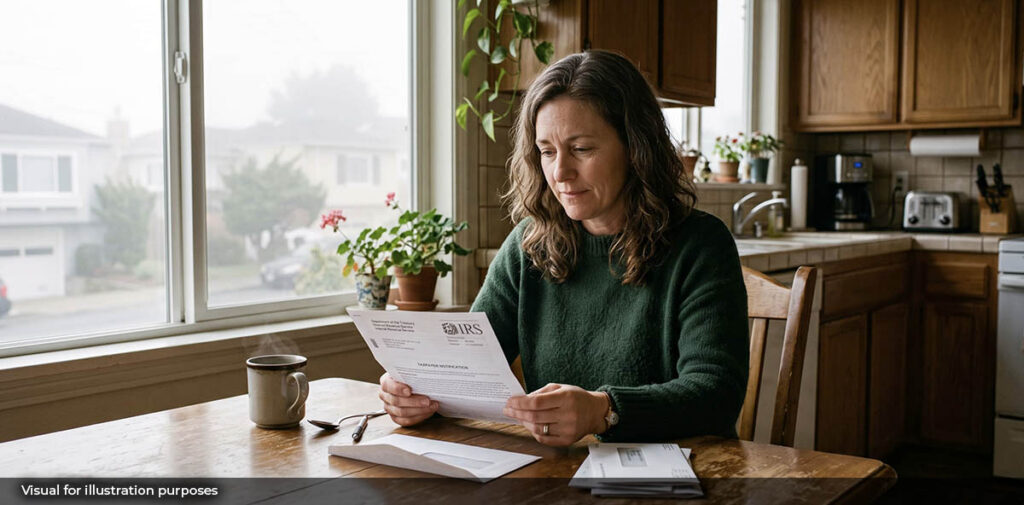
I wrote this because I answer the same worried questions almost every week, usually from someone who’s been avoiding their mailbox for a while. So let’s talk through it, neighbor to neighbor.
Key Takeaways:
Here’s what I’d tell you if we were sitting at your kitchen table in Daly City right now, coffee getting cold between us:
You are not in trouble for having back taxes. You’d be surprised how many of my neighbors here in San Mateo County are dealing with the exact same envelope in a drawer somewhere and are looking for San Mateo back tax relief.
Opening the letter is the hardest part, and it’s also the part that buys you the most options. The earlier we look at it together, the more doors are usually still open.
There is no one-size-fits-all answer. An Offer in Compromise sounds appealing, but it’s not right for everyone — sometimes a modest payment plan or a Currently Not Collectible review is the more honest and more sustainable path for your household.
You deserve someone who actually reads your file, not someone reading a script off a call center floor. That’s the whole reason I work solo — so nothing about your case gets lost in a handoff.
Why Back Taxes Pile Up in the First Place
Almost nobody plans to fall behind on the IRS or the California Franchise Tax Board (FTB). It usually happens gradually, and it usually happens for reasons that make complete sense once you say them out loud.
Maybe you’re self-employed — a contractor, a hairstylist, a rideshare driver, someone running a small shop on Mission Street or out of a garage in South San Francisco — and quarterly estimated payments got pushed aside during a slow season. Maybe a job loss or a medical bill ate into savings you were counting on for April. Maybe a life change — a divorce, a death in the family, a move across the county — meant paperwork got missed. I’ve heard versions of all of these from people right here in San Mateo County, and none of them make you careless or irresponsible. They make you human.
The trouble is, back taxes don’t stay quiet. Interest and penalties keep adding to the amount owed, and eventually the IRS or the FTB starts sending letters that get harder to ignore — a CP14 notice, a Notice of Intent to Levy, a Final Notice of Intent to Levy with a 30-day countdown, or from the state, an FTB collection notice tied to your wages or your bank account. That’s usually the moment people call me.
What IRS and FTB Collection Actions Actually Look Like
I find that a lot of the fear around back taxes comes from not knowing what’s actually happening — the unknown is scarier than the paperwork itself. So here’s the plain version:
Liens are a legal claim the IRS or FTB places against your property when a balance goes unaddressed long enough. It doesn’t mean they’re taking your house tomorrow, but it can affect your credit and your ability to sell or refinance.
Levies are more direct — this is when the IRS or FTB can reach into a bank account or take a portion of a paycheck. Wage garnishment through an employer is one of the most stressful things a client can experience, especially when it happens without much warning.
Notices escalate in tone the longer a balance sits unaddressed. Early letters are informational. Later letters carry deadlines. Knowing which stage you’re in changes what options are still realistically on the table.
If any of this sounds familiar, the good news is that collection activity is rarely instant, and there are usually steps available before things reach the levy stage — but timing genuinely matters, which is why I always tell people: don’t sit on that envelope.
Options People in San Mateo County May Qualify For
I want to be careful here, because I never promise a specific outcome to anyone before I’ve actually reviewed their file — that wouldn’t be honest, and as a licensed EA operating under IRS Circular 230, it wouldn’t be allowed either. What I can do is walk you through the categories of relief that exist, so you know what to ask about.
Installment agreements. Many people qualify for a monthly payment plan with the IRS or FTB that fits their actual budget, rather than paying everything at once. The size and length of the plan depends on your income, expenses, and total amount owed.
Offer in Compromise (OIC). This program lets certain taxpayers propose paying less than the full amount owed, based on a strict formula involving income, assets, and ability to pay. It’s not something everyone qualifies for — the IRS looks closely at your full financial picture — but for the right situation, it can meaningfully change what’s owed.
Currently Not Collectible (CNC) status. If your income barely covers basic living expenses in an area like San Mateo County — where rent alone can be a significant chunk of a paycheck — you may qualify to have collection activity paused while your finances are reviewed periodically.
Penalty abatement. If you have a reasonable cause for falling behind, such as a documented illness or a natural event, penalties (though usually not the underlying tax itself) may be reduced or removed.
California FTB-specific relief. The state runs its own collection process, separate from the IRS, and its own payment plan and hardship review options. Many of my Daly City and San Mateo clients are surprised to learn they’re dealing with two different agencies at once, each with its own rules and its own timeline.
Every one of these paths has eligibility requirements. Part of my job is going through your actual numbers — income, expenses, assets, filing history — and telling you honestly which doors are open and which aren’t, before we file anything.
Why Local Really Does Matter Here
I work specifically with people in Daly City, San Mateo County, San Francisco, and Alameda because I understand this area’s cost of living in a way a national call center never will. When someone tells me their rent in Daly City went up again, or that their commute down the 101 eats two hours a day, or that childcare in San Mateo County costs more than their mortgage did ten years ago, I’m not guessing — I live and work in this same economy.
That matters when we’re building a case for a payment plan or a hardship review, because those numbers need to reflect real Bay Area costs, not a national average that doesn’t come close to what things actually cost here. I’ve seen general commission-based firms use boilerplate figures that don’t hold up, and it can weaken a case that otherwise would have been strong.
What Working With Me Actually Looks Like
I’m not going to pretend this is a big operation. It’s just me — a licensed Enrolled Agent, which means I’m federally authorized to represent taxpayers before the IRS in every state, and I hold myself to the ethical standards of Circular 230. When you call, you talk to me. When I review your transcripts, I’m the one reading them. When we put together a plan, I’m the one who explains it to you in plain English, sitting across from you or on a call, not through a form letter.
Here’s roughly how it goes:
First, we talk — no cost, no pressure — about what notices you’ve received and where things stand. I ask questions about your income, your household, your filing history.
Second, I pull your IRS account transcripts (with your authorization) so we’re working from facts, not guesswork. A lot of people are surprised by what’s actually in their file — sometimes it’s better than they feared, sometimes there’s a missing return that needs to be filed first.
Third, I lay out, honestly, which relief categories you may qualify for and what each one would realistically involve — the paperwork, the timeline, the tradeoffs. I don’t oversell anything. If Currently Not Collectible status makes more sense than an Offer in Compromise for your situation, I’ll tell you that, even if it’s a smaller engagement.
Fourth, if we move forward, I handle the correspondence and filings directly with the IRS or FTB on your behalf, and I keep you updated at each step instead of leaving you wondering.
What to Gather Before We Talk
You don’t need a perfectly organized folder to reach out to me — most people don’t have one, and that’s completely normal. But if you want a head start, here’s what tends to help most during our first conversation:
Any IRS or FTB notices you’ve received, even old ones you set aside. The letter numbers in the corner (like CP14, CP504, or an FTB collection notice) tell me a lot about where things stand and how much time may be left before the next step in the process.
A rough sense of your last few years of filing — did you file every year, or are there gaps? There’s no judgment here; I ask because it changes what we do first.
A general picture of your household income and monthly expenses — rent or mortgage, utilities, childcare, transportation. Given how much it costs to live in San Mateo County or the wider Bay Area right now, this context matters more than people realize when it comes to what you may qualify for.
If you have an existing IRS account (through the IRS website) or old tax returns handy, that’s helpful too, but not required before our first call.
A Note on the Bay Area’s Particular Pressures
Clients come from all over the Bay Area — a duplex in Daly City, a rented unit off Mission Street in San Francisco, a family home near the Alameda waterfront, and everywhere in between. What I’ve noticed, again and again, is that the same national tax rules can land very differently depending on where someone actually lives.

A monthly payment plan that might look reasonable somewhere with a lower cost of living can be genuinely difficult for a household paying San Mateo County rent. A hardship review that looks straightforward on paper needs real numbers behind it — an actual BART pass, an actual grocery bill, an actual daycare invoice — not a generic national estimate. This is part of why I keep my practice local and manageable rather than trying to serve the entire country. I’d rather know this region well than know a little about everywhere.
Frequently Asked Questions
Is this only for people who owe a large amount? No. I work with people across a wide range of balances — from a few thousand dollars to much larger amounts. What matters more than the number is understanding your full situation.
Do I have to be behind on both my IRS and California FTB taxes for you to help? Not at all. Some clients only have an IRS balance, some only owe the FTB, and some are dealing with both agencies at the same time. I review each separately since they have different rules.
What if I haven’t filed returns in a few years? This comes up more often than people expect, and it’s honestly fine to tell me. Getting current on unfiled returns is usually the first real step, and I can walk you through exactly what’s needed.
Will you promise a specific dollar amount I’ll end up owing? I won’t, and you should be cautious of anyone who does before reviewing your actual file. What I will do is give you an honest, document-based assessment of the categories you may qualify for, based on IRS and FTB guidelines.
Do you only work with people in Daly City? Daly City is where I’m most rooted, but I work throughout San Mateo County, San Francisco, and Alameda as well. If you’re nearby and dealing with back taxes, reach out and we’ll figure out if I’m the right fit.
How do I get started? Reach out for an initial conversation. Bring whatever notices you’ve received, even if it feels overwhelming to look at them. We’ll go through it together, one document at a time.